

Underfloor Heating System India: How to Choose Between Electric and Hydronic Heating

What Is the Difference Between Electric and Hydronic Underfloor Heating?
Electric underfloor heating uses insulated heating cables laid under the floor that generate warmth directly from electricity. Hydronic underfloor heating circulates hot water through pipes under the floor, and that water first needs to be heated by a boiler or heat pump. Both deliver the same gentle, radiant warmth from the ground up - the difference is entirely in what powers the system.
The Two Systems, Side by Side
- Electric cables plug into your home's existing power supply directly
- Hydronic pipes need a boiler, heat pump or water heater nearby
- Electric systems respond to a thermostat change within minutes
- Hydronic floors take hours to reach the set temperature
- Electric installs fit into a thin screed layer of a few centimetres
- Hydronic pipework needs a deeper floor build-up for the loops
- Both use radiant heat, warming people and objects, not just air
Once you understand this split, the rest of the decision comes down to your building, your climate, and how the floor is being laid.
How Does Electric Underfloor Heating Work?
Electric underfloor heating works through a self-regulating heating cable that is laid in a screed bed beneath the final floor finish, with insulation underneath to stop heat escaping downward. Each room or zone gets its own cable run and its own thermostat, so a bathroom and a bedroom can run at completely different temperatures on the same system.
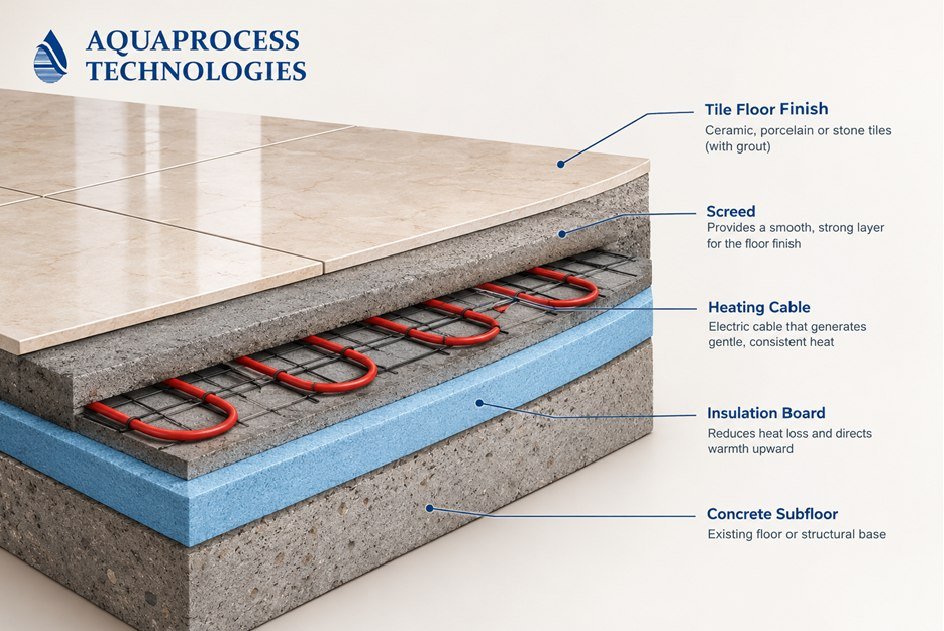
Why the Cable Itself Matters
Not all electric cable is built the same way. A genuine self-regulating cable automatically pushes out more heat in a cold corner near a window and less heat where sunlight is already warming the floor, keeping the whole room even without any manual adjustment. You can see how this automatic response works in practice and get the full technical breakdown on how underfloor heating is engineered and installed.
- Runs on a standard household electrical connection
- Divides a home into independently controlled heating zones
- Reaches comfortable room temperature in a short warm-up cycle
- Needs no boiler, flue, gas line or plant room space
- Suits wet areas like bathrooms as well as living spaces
- Fits into renovations without raising the floor height much
- Pairs with app-based smart thermostats for daily scheduling
This is the format Danfoss builds its underfloor heating cables, control systems and the Danfoss Icon smart thermostat range around, and it's the technology used across India's hill-station homes, hotels and even specialist projects like ice rinks.
How Does Hydronic Underfloor Heating Work?
Hydronic underfloor heating works by pumping water heated by a boiler or heat pump through a network of pipes set into the floor, so the entire slab becomes a low-temperature radiator. It's a well-established technology in parts of Europe and North America, where homes already run on central boiler-based heating.
The catch, for most Indian buildings, is everything the pipework depends on. Hydronic systems need a dedicated heat source, a manifold, pump, and enough floor depth to house the pipe loops - infrastructure that has to be planned from the design stage of a new building. According to the U.S. Department of Energy's overview of radiant heating, hydronic systems can draw on gas boilers, heat pumps or solar water heaters, which makes them efficient where that heating infrastructure already exists.
Which One Costs More to Install and Run?
| Factor | Electric Underfloor Heating | Hydronic Underfloor Heating |
| Heat source needed | None - runs on mains power | Boiler, heat pump or water heater |
| Floor build-up | Thin, renovation-friendly | Deeper, best planned at construction stage |
| Warm-up time | Minutes | Hours |
| Best suited for | Rooms, homes, hotels, retrofits | Whole-building new construction with a boiler already planned |
| Maintenance | None - no moving parts | Boiler, pump and manifold need periodic servicing |
| Ideal project size | 30 sq ft bathroom to large commercial floors | Large new-build projects with central heating plant |
There is no single, universal per-square-foot number for either system. The real cost depends on floor area, insulation, the final flooring material, the region's winter temperature, and how many zones you need - which is exactly why a proper site assessment matters more than a quoted rate card.
Why Do Most Indian Homes and Hotels Choose Electric Underfloor Heating?
Most underfloor heating projects in India - from Gulmarg chalets to Delhi NCR farmhouses to hotel bathrooms in Manali - use electric systems because India's buildings simply aren't wired for central hydronic heating the way European homes are. There's no existing network of heating boilers or radiator plumbing to plug a water-based system into, so hydronic UFH almost always means building that entire heat-source infrastructure from scratch.
Electric systems sidestep that problem completely. They install into an existing or newly built floor without a boiler room, work room-by-room instead of forcing a whole-building commitment, and hold up well through India's mix of tiled, marble and stone flooring - the finishes most homes here actually use.
Is Underfloor Heating Safe for Bathrooms and Wet Areas?
Yes, properly certified electric underfloor heating cable is designed and tested for wet areas, and bathrooms are actually one of its most common applications in India. The heating element sits sealed beneath waterproofing and screed, fully isolated from contact, with the cold-connection joints treated to the same water-resistance standard as the rest of the system.
Genuine cable also carries independent electrical and water-submergence certification, and reputable installers back it with a long manufacturer guarantee rather than a vague promise. You'll find the full list of safety, wet-area and performance questions answered on the underfloor heating FAQ page.
What Should You Check Before Choosing an Underfloor Heating Installer?
Before signing off on any underfloor heating quote, confirm four things: where the cable is actually manufactured, what guarantee backs it, whether the installer designs the system or just supplies cable, and whether they can show completed projects you can verify.
- Ask for the cable's country of origin and manufacturer certification
- Confirm the written warranty period in years, not just verbally
- Check if system design, zoning and load calculation are included
- Ask whether the same team handles installation and commissioning
- Request references from executed jobs similar to your project size
- Find out if they support your electrician, tiler and layout teams
- Check if they will troubleshoot the system after handover, not just sell it
A browse through a completed underfloor heating project gallery tells you more about an installer's real capability than any brochure claim can.
Frequently Asked Questions
Is underfloor heating available in India?
Yes. Electric underfloor heating is installed across Indian homes, hotels and hill-station properties, sourced through authorised channel partners of established manufacturers like Danfoss.
Which is better for Indian homes, electric or hydronic underfloor heating?
Electric is generally the more practical choice in India, since it needs no boiler infrastructure, fits renovations, and can be zoned room by room.
How much does an underfloor heating system cost in India?
There is no fixed per-square-foot rate. Cost depends on area, insulation, flooring material, climate zone and the number of heating zones required.
Can underfloor heating be installed in an existing home?
Yes. Electric underfloor heating is well suited to renovations because it needs only a thin screed layer, unlike hydronic systems that usually need floor-level planning from the start.
Does underfloor heating consume a lot of electricity?
Consumption depends on the region's winter temperature and insulation. Systems draw more power at cold start and settle to a lower level once the set temperature is reached.
Does underfloor heating need regular maintenance?
A correctly installed electric system has no moving parts and needs no routine maintenance, unlike hydronic setups where the boiler and pump need periodic servicing.
Getting It Right, the First Time
Underfloor heating is buried under your floor, which means the design and installation quality matter more than almost any other home comfort decision you'll make. Electric systems have become the practical standard for Indian conditions because they install cleanly, need no boiler infrastructure, and hold up across the range of projects the country actually builds - from a single bathroom to a full hotel floor.
If you're planning a project and want it engineered correctly the first time, schedule a meeting with a design specialist or send in your project details for a consultation.